
Step 01
Fresh concrete
Slump by cone and temperature are measured on delivery, with sampling to ASTM C172 from the discharge stream rather than the first or last of the load.
Concrete is specified by a strength it will not reach for 28 days, on a site where it is placed in minutes. Testing is what connects the two.
Fresh concrete is checked before it goes in. Slump measures workability and, more usefully, consistency between loads: a slump that jumps between trucks means the mix or the water is not under control. Temperature is recorded because hot concrete, common on a Karachi summer site, stiffens fast, loses workability and can lose long term strength.
Compressive strength is determined on specimens cast from the same concrete that went into the structure, cured under controlled conditions and crushed at 7 and 28 days. The 7 day result is an early warning, typically around two thirds of the 28 day figure, and lets you react while the pour is still recent. The 28 day result is the one the specification is written against.
When the specimen results are in doubt, or the concrete is already in place and its history is unknown, the assessment moves to the structure itself. Cores are cut, prepared and tested, with corrections applied for length to diameter ratio and reinforcement. That result, read alongside Schmidt hammer and cover survey data, is what supports a decision about acceptance or strengthening.

The sequence we follow on site and in the laboratory, and the point of each stage.
Slump by cone and temperature are measured on delivery, with sampling to ASTM C172 from the discharge stream rather than the first or last of the load.
Cubes of 150 mm or cylinders of 150 by 300 mm are cast in three layers with the specified compaction, marked and left undisturbed for the first 24 hours.
Specimens are demoulded and cured in a water tank at controlled temperature until the test age, because curing conditions change the result more than most people expect.
Specimens are capped or ground flat and loaded to failure in a calibrated compression machine, with the failure mode recorded as well as the load.
Where the structure must be assessed directly, cores are cut clear of reinforcement, prepared to a proper length to diameter ratio, and tested with the appropriate strength corrections.
Every result is reported with its method reference and the calibration status of the instrument used.
What engineers most often ask us about concrete testing.
Most investigations combine several of these. We scope them together so you are not paying to mobilise twice.

A mix designed for your materials, your exposure and your placing conditions, then proven by trial batch before it goes...
Read more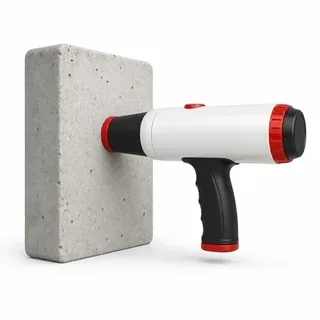
The fastest way to compare concrete across a structure.
Read more
Find the steel before you cut, drill or core, and check that the cover protecting it is what the drawing said it would...
Read moreSend us the location, the structure and your programme. You get a scoped quotation with the standard, the number of tests and the turnaround written into it.